24 August 2012

Launch of Iraq War Inquiry Campaign


On Thursday 16 August 2012 I attended the launch, in a Committee Room in Parliament House, Canberra, of a campaign by the Iraq War Inquiry Group (IWIG), of which I am a member, for an inquiry into how Australia came to participate in the invasion of Iraq.

The meeting was hosted by the courageous Mellisa Parke, ALP Member for Fremantle, Senator Scott Ludlam (Greens, WA) and and the Member for Denison, Andrew Wilkie MP (Independent), who readers will recall resigned his post in the Office of National Assessements shortly before the invasion on the grounds of what he saw as the misuse of intelligence reporting by the Government.

The launch of an issues paper prepared by IWIG members, which can be found at our website www.iraqwarinquiry.org.au, was undertaken by former Prime Minister the Right Honourable Malcolm Fraser AC CH. An extract from an SBS Radio feature piece on the campaign, containing some of Mr Fraser’s remarks at the launch, and from a prior telephone interview with me, can be downloaded from here. An extract from an interview with Senator Ludlam can be downloaded from here.

For me there are two sets of issues to be addressed by any inquiry: issues specific to the circumstances of the lead-up to the invasion and the decision to commit; and an analysis of the lessons to be learned from that process to ensure we put in place a more robust process for making that most important of decisions – whether or not to send the Australian Defence Force to war or to involve it in warlike activity.

Regarding the first matter, in Rushing willingly into Iraq, one of my first posts when I commenced blogging on Australian Observer back in February 2009, I wrote:

As most of us celebrate the setting of a deadline for the withdrawal of American troops from Iraq, we should not allow ourselves to be distracted from the important question of how we all came to be involved in this mess in the first place. The most important questions here revolve not around the questions relating to whether Saddam Hussein’s Iraq did or did not have weapons of mass destruction (WMD), but whether our governments were completely open with us about what they knew and when, at what stage various decisions were taken and commitments given, when we became irreversibly committed to the invasion of another country, and whether this was all some kind of ghastly “intelligence failure”.

We now know more even than we did when Garry Woodard wrote the 2007 analysis to which I provided a link in the above post, but the questions remain: questions about the legality of the war, about the misuse of intelligence and unresolved conflicts in the intelligence reporting and analysis, questions about how the decision was made and when, and serious questions about how honestly the Australian Government dealt with the Australian public and the Parliament it had elected.

Specific questions the Iraq War Inquiry Group would like to see addressed by a suitably authorised and empowered inquiry include:

Intelligence

According to the intelligence inquiries in Australia that followed the 2003 Iraq war, views diverged between ONA and DIO concerning the nature of the evidence for the possession by Iraq of WMD. We need to know:

   What was the Australian intelligence advice given to the government in the lead-up to the war and how was the divergence of views between the two assessment agencies reconciled?

    Was the intelligence advice challenged at the time by any members of the government, and if so by whom?

    What was the nature of the challenges, what was the response by the assessment agencies and how were doubts resolved?

    Was the intelligence given to the government restricted to advice on the possession by Iraq of WMD, or was wider advice also provided on whether Iraq posed an actual threat? If there was a threat assessment, what did it say?

    Philip Flood, who conducted a post-war inquiry into Australian intelligence, described the evidence on Iraq’s WMD as ‘thin, ambiguous, and incomplete’. How does Mr Howard reconcile this with his presentation to parliament on 4 February 2003?

Humanitarian issues

    Were any UN, NGO or other reports of the effects of the 1991 Gulf War, the economic sanctions and the likely effects of a further war considered in the government’s decision to go to war in 2003? If not, why not? If so, which reports, and how much weight was given to them?

    What degree of civilian suffering did the government expect from the war, and what level of suffering was considered acceptable? Did the government request estimates of civilian casualties?

    Were any contingency plans made by the government to help reduce and deal with the predicted enormous humanitarian effects of the war?

Legal issues

    Were the Australian lawyers drafting the government’s advice in contact with those drafting advice for the British and American governments, and which Australian ministers or ministerial staff were informed? What other legal advice did the government seek? What legal advice was provided to the governor-general?

    Why did the Australian government change its acceptance of the compulsory jurisdiction of the International Court of Justice when it did? Was its response in parliament on the war misleading?

    Why did the prime minister fail to bring the decision to go to war to the Federal Executive Council as he had told the governor-general he would?

On the question of how to provide for a more robust process of decision making, the current system, under which it is the right of the Executive, rather than the Parliament, to decide to send troops to war is in the Australian constitutional context a legacy of the Royal Prerogative, which in turn has its roots in the pre-democratic notion that the power to make war is an attribute of the sovereign rather than of the people.  In the globalised world of the 21st century, and in any society founded on the belief that power flows from the people to the state rather than from the state to the people, it is both an anachronism and an anomaly.

By having the power to decide in the hands of too few people it also leaves the Australian community exposed to serious risks, due to the fact that in practice the Prime Minister him/herself, with or without the advice and consent of his/her colleagues and their departmental advisers, can commit Australian forces to war or warlike operations in circumstances short of a direct attack on Australia’s homeland. These risks include misleading, overstated or over-certain claims to the Australian Parliament and people, patently absurd claims of self defence against a real and imminent threat to Australia, a lack of clarity as to what the mission is and what success would look like, and vexed questions of UN authority, a source of legitimacy with which Australian people are comfortable, and of legality in relation both to customary international law and to the provisions of the Charter of the United Nations.

I think that the solution to this, one which I hope would emerge from any inquiry into how we came to be involved in the Iraq War, is to transfer the decision making power from the Executive to the Parliament.

On 13 February 2008 Senator Ludlam introduced a Private Members’ Bill to limit the prerogative power of the Executive to commit Australian forces to overseas service without the consent of the Parliament. The provisions of the Bill are outlined in War Powers Bill.

My colleagues Andrew Farran, Garry Woodard and I made a joint submission in support of Senator Ludlam’s Bill, which I can no longer find on the Parliament House website. The contents of our submission will have to be the subject of a later post.

Unfortunately the major parties gave Senator Ludlam’s Bill short shrift, a matter I dealt with in some detail in War Powers Bill crushed by major parties. Perhaps a careful look at how we committed to the invasion of Iraq will encourage them to take the matter more seriously, but I fear that both the major parties are much too comfortable with the current arrangements.

04 August 2012

Visit to Shanghai Naval Squadron


In May 1999 I accompanied Defence Minister John Moore on an official visit to China, Korea and Japan. Others in the party included Vice Chief of the Defence Force Air Marshall Doug Riding, and Head of the Strategic and International Policy Division Allan Behm, now Chief of Staff to Greg Combet, Minister for Climate Change and Energy Efficiency.

The trip was a bit of a nightmare, but it produced a few passable photographs.

One of the early items on the itinerary was a visit to Shanghai Naval Squadron, where the Minister inspected the Guard of Honour and we went on board a vessel that was in port:


28 July 2012

Richter plays Rachmaninov Preludes


In the course of his composing career Sergei Rachmaninov wrote 24 Preludes in three sets: the famous Prelude in C Sharp Minor, Op. 3 No.2, then the ten Preludes Op. 23, written in 1901 and 1903, and finally the thirteen Preludes Op. 32, written in 1910. Together they span all the major and minor keys.

They are longer than the traditional musical fragment which had hitherto been associated with the term Prelude – Chopin’s for example – and tend to be musically complex and technically demanding. They are beautiful pieces, and the great Russian pianist Sviatoslav Richter was the master of them.

As a sampler, try these examples from YouTube, all played by Richter:


Prelude in G minor Op. 23 No. 5 (one of the most well-known)

22 July 2012

Deterring asylum seekers


On 28 June 2012 the Prime Minister and the Minister for Immigration and Citizenship announced that the Governments was establishing an Expert Panel on Asylum Seekers to provide a report on the best way for Australia “to prevent asylum seekers risking their lives on dangerous boat journeys to Australia”.

The Panel is being led by Air Chief Marshall Angus Houston AC AFC (Retired). The other members of the panel are Mr Paris Aristotle AM, Director of the Victorian Foundation for Survivors of Torture Inc (also known as Foundation House), and Professor Michael L’Estrange, AO, Director, National Security College.

It is to provide advice to the Prime Minister and the Minister for Immigration and Citizenship prior to the start of the next sitting period in August 2012. The Panel’s advice will be released publicly.

The substantive parts of the Terms of Reference are as follows:

The Panel will provide advice and recommendations to the Government on policy options available, and in its considered opinion, the efficacy of such options, to prevent asylum seekers risking their lives on dangerous boat journeys to Australia.

As part of its review, the panel will take into account, and provide policy advice on:
- how best to prevent asylum seekers risking their lives by travelling to Australia by boat
- source, transit and destination country aspects of irregular migration
- relevant international obligations
- the development of an inter-related set of proposals in support of asylum seeker issues, given Australia’s right to maintain its borders
- short, medium and long term approaches to assist in the development of an effective and sustainable approach to asylum seekers
- the legislative requirements for implementation, and
- the order of magnitude of costs of such policy options.

Several things strike me about the task which Angus Houston and his colleagues have been set:

(1)   Although a nicer word is used, we are talking about deterrence here. The Australian Government has no direct means to prevent asylum seekers from embarking; what it wishes to do is to deter them from making that decision.

(2)  This raises an important threshold question about what place there is for “deterrence” in any policy framework that deals with the quest for asylum by people with “a well-founded fear of persecution”. The notion of deterring people from seeking asylum by whatever means they might have to hand seems to me to contradict the whole scheme and purpose of the United Nations Convention and Protocol on the Status of Refugees.

(3)  A second threshold question is what, if any, responsibility does the Australian (or any) Government have to prevent non-citizens, to whom it acknowledges no other duty, from taking risks which those non-citizens themselves have decided, having regard to their own particular circumstances, it is in their best interests to take? The Australian Government does not prevent its own citizens from taking risks like smoking, or risks that travel insurance companies normally exclude from cover: skydiving, off-piste skiing, or climbing Mount Everest, for example.

(4)  If some basis can be discovered for Governments seeking to deter asylum seekers from risky behaviour, should asylum seekers also be deterred from crossing mountain ranges, trudging across deserts, put themselves in the way of potential dangers from bandits, swimming fast flowing rivers or those containing crocodiles or piranha, etc?

(5)  As to the means of deterrence, most of the options are depressingly familiar:
-  Mandatory detention (introduced by the Keating Government in the late 1980s and maintained ever since). This procedure flies directly in the face of the provisions of the Convention, which permits a short initial period of detention for identity and health checks, buts state that detention should be a last resort.
-  Limitation on access to services and right to work. Again, contrary to the provisions of the Convention, which states expressly that persons seeking asylum should be permitted to work (and to practice their profession where they have recognised credentials) at the prevailing remuneration rate.
-  Limitation on prospects for family reunion. This one flies in the face of one of the principles on which the Convention was established: the international conference which led to the Convention specifically recognised the principle of the unity of the family and stated that is an essential right of the refugee
-  Automatic diversion to another country (“offshore processing”). This too seems to me to fly in the face of the provisions of the Convention. Each refugee is an individual and entitled to have his/her claims assessed on their merits.
-  Temporary Protection Visas, introduced by the Howard Government and advocated now by the Opposition. These had, and would have on the basis that the Opposition intends, a specifically deterrent intent, and so were attended by inhumane provisions such as no family reunion, right to work compromised by their temporary status, and restricted access to social services, all of which seem to me to be contrary to our obligations under the Convention. They also seem to me to be contrary to good sense: if we accept that people are in need of refuge, it is in our own interest to get them out of detention as quickly as possible, and do all we can to assist them to re-establish themselves and become productive citizens.
-  Sending them to another country for the explicit purpose of placing them “at the back of the queue”. Apart from the fact that there is no queue, this strikes me as so inhumane, such a shocking example of dehumanising people and treating them as chattels, that I am amazed that anyone even thought of it – or at least amazed that anyone who did think of it was shameless enough not only to admit it but to promote it as a good idea.

Inherent in many of the policy approaches that has been adopted over the years has been an underlying approach that harsh treatment of asylum seekers who arrive by boat will discourage others from making the journey. The idea of treating people more harshly than they deserve in order to influence the behaviour of others is offensive in the extreme, and of dubious legality.

As far as the problem the Government has set Angus Houston and his colleagues is concerned, my tentative conclusions would be:
-  Clearly anything that makes the prospective treatment on arrival more unpleasant is likely to have an influence at the margin.
-  For the genuine refugee: it is unlikely that anything we might be prepared to do would act as a deterrent for someone who thinks “I can’t go back, and I can’t stay here, my best hope is to head for Australia and hope for the best”.
-  Any framework that rules out family reunion is likely to have the perverse effect of encouraging people to embark on the boat voyage on the grounds that the only prospect of reunion is to arrive in the jurisdiction independently.

I wish Angus Houston and his colleagues all the best in a task which I don’t envy them. I don’t know what the sort of advice the Government expects will come out of the intensive process of consultation and deliberation in which the panel is currently involved, but knowing two members of the panel well and one slightly, I am confident that they will be fiercely independent in coming to their conclusions, that they will call the issues as they see them. Where that will leave the Prime Minister, or for that matter the Leader of the Opposition, remains to be seen.

15 July 2012

Narciso Yepes: Jeux Interdit


And now for a little bit of pure pleasure – the delightful little romance that Narciso Yepes wrote as a gift for his mother in 1938 and which was subsequently used as the theme for René Clément’s 1952 film Jeux Interdit (“Forbidden Games”). I don’t know whether Yepes was coy about being the composer or whether his authorship of the piece was forgotten, but many recordings list the composer as “Anonymous” – including even recordings of Yepes himself. For example, his CD Romance d’Amour lists the composer as “Anónimo” and describes it as “Musique du film; Arr.: N. Yepes”.

When you watch the video, take note of the ten-string guitar, which was developed in 1963 by Yepes, in collaboration with renowned guitar maker José Ramírez. The four additional strings were tuned to C, A#, G#, F#, which resulted in the first guitar with truly chromatic string resonance - similar to that of the piano with its sustain/pedal mechanism. He gave this guitar its first outing in 1964, in a performance of the Concierto de Aranjuez with the Berlin Philharmonic, and from that time on he used that instrument exclusively. I had the pleasure of hearing him in a solo recital in Canberra, an ABC Concert on 5 June 1976.

Access the video clip here.

For an earlier post on this wonderful guitarist see Narciso Yepes and the Concierto de Aranjuez.

09 June 2012

Vale Helen Beh, 1941-2012


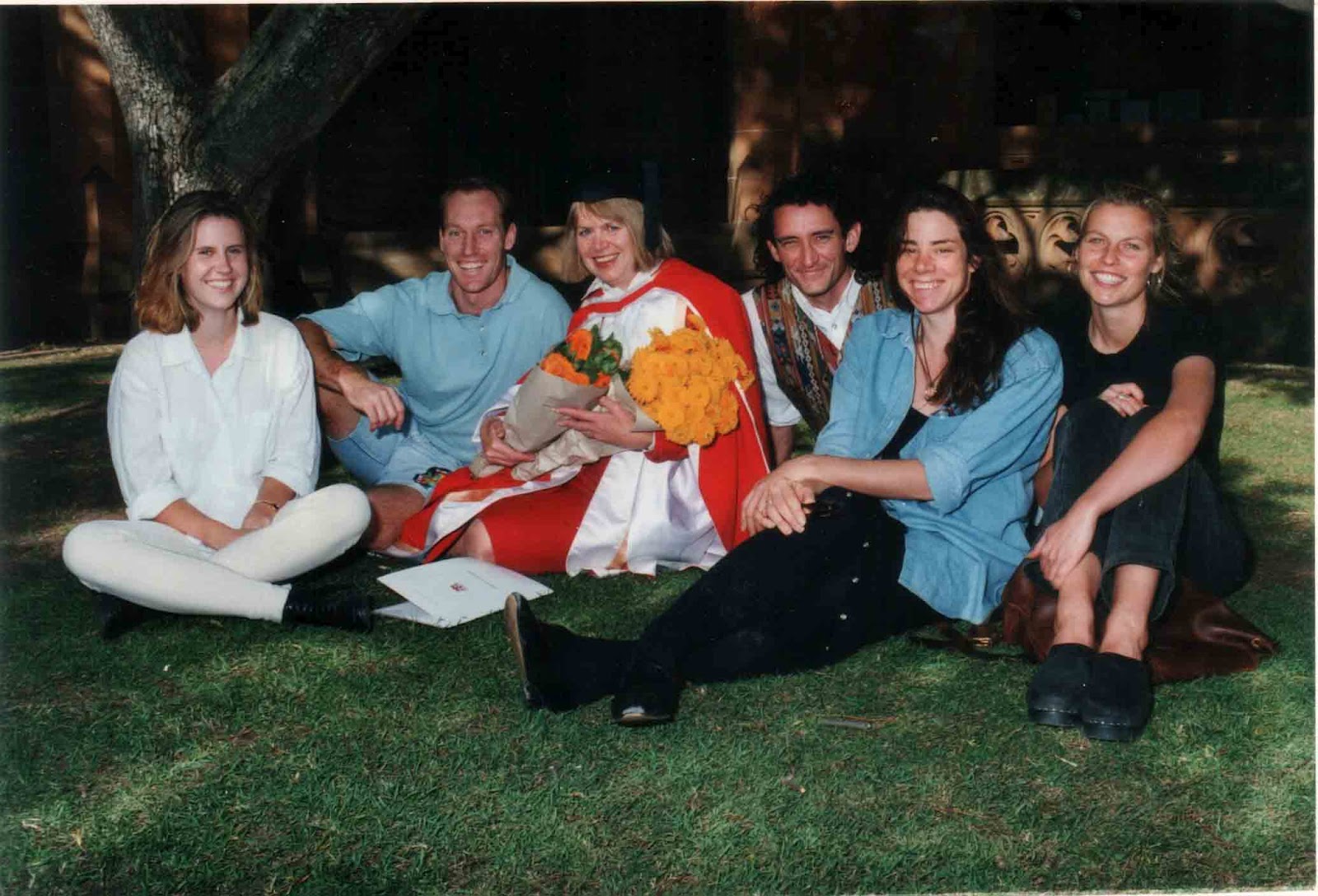
My lifelong friend Professor Helen Beh, one of my father’s first PhD students, who went on to become Head of the Department of Psychology at Sydney University, died on 7 February 2012.

The following obituary was written by her husband, Cyril Latimer; the Paul Barratt referred to therein is my father.

Professor Helen C. Beh.  1941 – 2012.  Obituary
Most scientists would not expect to publish in the prestigious journal Science at any stage of their careers.  In 1965, within two years of the commencement of her academic career, Helen Beh and her co-author Paul Barratt published their paper “Discrimination and Conditioning during Sleep as Indicated by the Electroencephalogram” in Science.  This landmark paper, demonstrating that changes in electroencephalograms indicate that subjects respond more frequently to significant or meaningful stimuli during sleep than to non-significant stimuli, and that conditioned reactions may be induced in sleeping subjects, is still regularly cited today.
Professor Helen Beh went on to become an internationally recognized expert in sleep research, psychophysiology, human performance and sports psychology.  In a university career spanning 38 years, she published four books and 73 papers in peer-reviewed journals. She was regularly invited as a keynote speaker at national and international conferences, and acted as guest and consulting editor for journals such as the Psychological Bulletin and the Journal of Experimental Psychology.  She held numerous overseas research appointments, including: Birkbeck College, University of London; McGill University; and the University of California, Berkeley.  Besides holding many research grants herself, she regularly reviewed grant applications for the Australian Research Council and the Australian National Health and Medical Research Council. Helen Beh acted as a consultant to many NSW State Government Departments and Australian Companies.  These included the NSW RTA, QANTAS, NSW Cricket Association, the Australian Football League and the Sydney Opera House.
Helen Beh was an excellent teacher, and in 1993 was one of the first academics to receive an Excellence in Teaching Award at the University of Sydney.  She supervised 83 honours students, 18 masters students and 20 PhD students, many of whom now hold senior academic, government and business positions in Australia and overseas.  She recognised very early the potential of computer technology in teaching, particularly in her courses on psychophysiology and human performance, and this insight, together with her superb communication skills, ensured that her lectures and tutorials were regularly crammed with enthusiastic psychology students.  Even today, her students attest to her presence at the lectern, her critical thinking, her ability to challenge, inspire and exhort them to “seek ever to stand in the hard Sophoclean light and take their wounds from it gladly”.


Professor Helen Beh with some of her postgraduate students

Many academics would be satisfied with excellence in teaching and research, but some would argue that Helen Beh’s major contributions, particularly to the University of Sydney, were achieved in her role as a senior administrator.  Having served as Sub Dean, Associate Dean and Pro Dean in the Faculty of Science, and also Head of the Department of Psychology, she was appointed Acting Dean 1995-1997.  This was a very difficult and turbulent time in Australian universities, a time of fiscal uncertainty and a time when central resources and power were devolved upon the faculties and thence the individual departments.  It was a time for fortitude, clear thinking, a thorough understanding of what universities are and should be about, innovation, sharp negotiating skills and a willingness to compromise – an environment in which Helen Beh thrived.  For various periods during 1996 and 1997, she was Acting Pro-Vice–Chancellor, Sciences Group, and in 1999 was awarded an Honorary Professorial Appointment in the Faculty of Science.  She was the first woman to hold a Dean’s appointment in the Faculty of Science at the University of Sydney, and is remembered for her outstanding negotiating skills, her economic and business acumen and her ability to inspire confidence and extraordinary loyalty in colleagues and staff.


Helen relaxing with Faculty colleagues Damon Ridley (left) and Bob Hewitt (right).

Helen Charmaine Beh was born on the 31st of July 1941 in Singleton, NSW, daughter of Florence (Simpson) and Frederick Charles Beh.  She attended Singleton Public and High Schools and was awarded a BA (Hons) at the University of New England in 1963.  In 1969, she was the first woman to be awarded a PhD in Psychology at UNE.  In 1973, she became the first woman to be appointed Senior Lecturer in Psychology at the University of Sydney.  For her services to the Faculty of Science, she was awarded a Master of Science (ad eundem gradem) by the University of Sydney in 2000.  

For someone who never suffered fools gladly and rarely took prisoners, she could be incredibly generous with her time, her advice and her finances.  She assisted dozens of students financially, and steered and encouraged many uncertain young postgraduates into successful careers in universities, government and business.  She always knew a good set of neurons when she saw one, and very rarely were her charity and support misplaced.  Formidable and tenacious in argument, when her pistol misfired, she would, like Dr Johnson, simply reverse the weapon and bludgeon her opponent with the butt end. From personal experience, when insulted, she had a very fast and very accurate straight right. She was a mean chess and scrabble player, and gloating opponents would often find the board and pieces in their laps.  Helen had a devilish sense of humour that was used effectively against those with an inflated sense of their own importance, and often to restore perspective in many a committee meeting.

Raised on the land, she was an excellent horsewoman, a sport to which she returned in later life.

Colleagues often remarked on her capacity for working long hours and on her ability to achieve goals quickly and effectively.  I recall her sitting down regularly at her computer in the evenings after cooking the family meal, and over the period of a few weeks, writing not one, but two textbooks – one on Human Performance and the other on Psychophysiology.  She then formed her own publishing company and had them printed.  They were highly successful and students bought them by the hundred.

Helen’s fighting spirit was exemplified when she was diagnosed with breast cancer in 1999. She immediately enrolled in a part-time Law degree at Macquarie University, collected several prizes and graduated with first-class honours and the Dean’s Award for topping the year in 2005.

In August 1999, Helen Beh resigned from the University of Sydney to become the first CEO of the Australian Orthopaedic Association (AOA).  Using her sound financial skills, she was involved in increasing members’ equity by almost $10 million in eight years.  This despite membership fees having effectively decreased by around 30% over the same period.  With her enduring interest in training programmes and continuing education, she ran workshops to train orthopaedic surgeons who acted as interviewers for the AOA training programme, and oversaw the development of a national training program and establishment of a national selection process.  She was influential in bringing about the swift and successful completion of the Memoranda of Understanding and Service Agreements for the training of surgeons between the Royal Australasian College of Surgeons and the Specialist Surgical Societies.  These formal arrangements were essential to the College receiving accreditation from the Australian Medical Council, and everyone involved valued Helen Beh’s leadership, intellectual input and commitment to the process.  Some believe that her most significant contribution to the AOA was her knowledge and advocacy of proper corporate governance in the workings of AOA Boards and associated committees.

In early 2007, Helen was diagnosed with a malignant and aggressive brain tumour, and without treatment, given weeks to live.  The fighting spirit resurfaced, and she enrolled in a counselling course!  With the help of her excellent medical teams at the Prince of Wales Hospital, the Sacred Heart Hospice, Darlinghurst, and Milford House Nursing Home, not to speak of the love and care given by her family and friends, she defied all the statistics of her disease, surviving almost six years, and being able to play with her beloved grandchildren Will and Honor.  Helen, being Helen, had no funeral or memorial service – just a simple cremation and Wake at which many of her family, friends, colleagues and students remembered and celebrated a life well lived.  Helen’s Memorial is to be a dedicated Holm oak and bench seat overlooking Randwick Pond in Centennial Park.  She is survived by daughter Phillipa, sons Jason and Steven, husband Cyril and her beloved cats, “Screamer” and “Big Cat”.

Cyril Latimer
4 June 2012

22 May 2012

Labor, Mining and Scandals


A week or so ago I was interviewed on the telephone by Keri Phillips of ABC Radio National for a Rear Vision program which was to explore the parallels between the efforts of the 1970s Whitlam Government and the Rudd/Gillard Government to secure for the public a greater share of the economic benefits of Australia’s mineral wealth.

The program went to air on Sunday 20 May, with the title Labor, Mining and Scandals, and it contained quite substantial slabs of that pre-recorded interview. More importantly, it is a good piece, well worth a listen.

Live audio of the broadcast, or a download of the podcast, are accessible here.

For direct access to a transcript, see here.